

Fixed teeth for an edentulous jaw: All-on-4 and All-on-6
Dr. Dt. Kıvanç Türkoğlu, Specialist in Oral and Maxillofacial Surgery · Klinik 29, Altunizade, Üsküdar
04/ 10
Summary
- When a jaw has no teeth left, or the remaining teeth cannot be saved, a single fixed bridge carrying all the teeth can rest on a small number of implants. A plan with four implants is called All-on-4, and one with six is called All-on-6.
- In the four-implant plan the two back implants are usually placed at an angle. The angle keeps them away from structures such as the sinus and the nerve canal and extends the support for the bridge further back.
- In suitable patients, temporary fixed teeth can be fitted on the day of surgery. This depends on the implants being held firmly in the bone at the moment they are placed.
- Dr. Dt. Kıvanç Türkoğlu provides All-on-4 and All-on-6 treatment in suitable patients. Suitability is assessed with an examination and a CT scan.
Who is it considered for?
It is considered for people without teeth who struggle with a loose denture, speech or chewing. People about to lose many teeth to advanced gum disease, fractures or large cavities are also in this group.
When bone has shrunk at the back, placing one implant per tooth often needs extra bone surgery. In this plan the implants go into the front and middle of the jaw, where more bone usually remains. For some patients this can reduce the need for grafting.
Who may not be suitable?
Poorly controlled diabetes, radiotherapy to the head and neck and some medicines that slow bone turnover change the plan. These medicines may be taken as tablets or injections. Tell your clinician about every medicine you use.
Heavy smoking and an inability to clean every day harm the tissues around implants. If bone is also very thin at the front, grafting or another approach is discussed first. Night-time clenching and grinding are taken into account when designing the bridge.
Assessment and planning
The examination looks at lip support, how much gum shows when you smile and the teeth in the opposite jaw. After a panoramic X-ray, a cone beam CT measures bone height and width and locates the sinuses and the nerve canal.
The surgeon and the clinician who will make the bridge plan the treatment together. The position of the teeth is decided first. The implants are then placed to suit those teeth.
Four or six?
The number depends on bone volume, jaw width, the opposing teeth and biting force. Six implants spread the load over more points. Four implants can reduce extra surgery when bone is limited.
Some plans use five implants. The right number for you is discussed after the examination and the scan.
Surgery day and temporary teeth
The procedure can be done under local anaesthesia. Sedation is also an option when needed. Teeth that cannot be saved are removed in the same session, the bone edge is smoothed and the implants are placed.
As each implant is placed, its firmness in the bone is measured. If the values are adequate, screw-retained temporary teeth are fitted on the same day or within a few days. If not, the implants are left to heal without load and a removable temporary denture is worn in the meantime.
The final bridge
Implants usually need a few months to bond with the bone. This can take longer in the upper jaw. Soft food is advised with the temporary teeth during this period.
Once healing is complete, impressions are taken and the final bridge is made. It is screwed to the implants. You cannot remove it at home. The clinician takes it off at check-ups when needed.
Daily care
The underside of the bridge and the area around each implant need daily cleaning. Interdental brushes, a water flosser and thick-ended floss are used for this. Your clinician will show you which suits you.
Regular check-ups look at the tissue around the implants, screw tightness and how the teeth meet. The bridge is removed and cleaned when needed.
How it differs from removable dentures
A conventional full denture rests on the gums and palate. It gets no support from bone, so it may move when you speak or eat. A snap-on denture clips onto implants. In the lower jaw two implants are often enough, while the upper jaw usually needs more. The number is decided for each person. It is more stable but comes out for cleaning.
A fixed bridge on implants stays in the mouth and leaves the palate uncovered. In return it needs more implants and more careful cleaning. When bone loss is severe, a removable denture may restore lip and cheek support more easily. The choice is made together, based on bone, cleaning habits and expectations.
Known risks
Swelling, bruising and pain are expected in the first days. One of the implants may fail to bond with the bone. The plan is then reviewed and an extra implant may be needed.
The temporary bridge can break, screws can loosen and inflammation can develop around implants. Altered sensation in the lower jaw or sinus problems in the upper jaw can occur, though rarely. Some parts of the bridge may need renewing over the years.
Videos

What is All-on-X treatment?
Open the video page
How is the number of implants decided?
Open the video page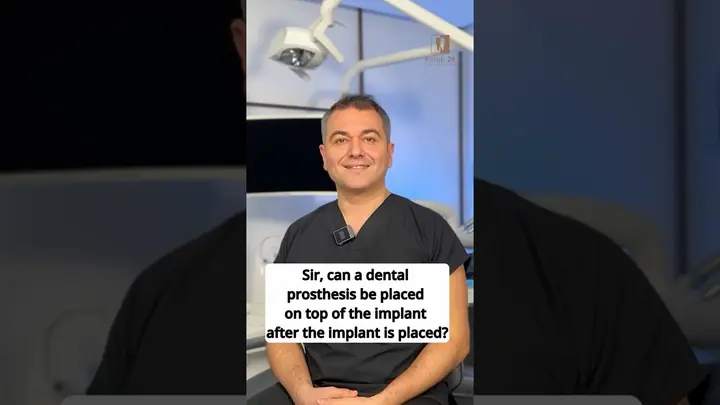
Can the upper bridge be fitted in the same session as the implants?
Open the video page
How long do implant and bridge treatment take?
Open the video page
Videos in Turkish from the Klinik 29 YouTube channel. Pressing play opens the YouTube player on this page.
Frequently asked
Will I definitely get fixed teeth on the same day?
This cannot be promised in advance. The decision is made during surgery, based on how firmly the implants sit in the bone.
Can I take the fixed bridge out myself?
No. It is screwed to the implants. The clinician removes and refits it at check-ups when needed.
I was told I have little bone. Is this still possible?
In some patients angled implants reduce the need for extra bone surgery. If bone in the upper jaw is very thin, options such as grafting or zygomatic implants may be discussed.
How long does treatment take?
The surgical stage is done in one session. The final bridge is made after the implants have bonded with the bone. The total time varies with the bone and the jaw.
Sources
- Maló P, de Araújo Nobre M, Lopes A, Moss SM, Molina GJ. A longitudinal study of the survival of All-on-4 implants in the mandible with up to 10 years of follow-up. J Am Dent Assoc. 2011;142(3):310-320. doi.org/10.14219/jada.archive.2011.0170
- Maló P, de Araújo Nobre M, Lopes A, Ferro A, Botto J. The All-on-4 treatment concept for the rehabilitation of the completely edentulous mandible: A longitudinal study with 10 to 18 years of follow-up. Clin Implant Dent Relat Res. 2019;21(4):565-577. doi.org/10.1111/cid.12769
- Patzelt SBM, Bahat O, Reynolds MA, Strub JR. The All-on-Four treatment concept: a systematic review. Clin Implant Dent Relat Res. 2014;16(6):836-855. doi.org/10.1111/cid.12068
- Papaspyridakos P, Chen CJ, Chuang SK, Weber HP. Implant loading protocols for edentulous patients with fixed prostheses: a systematic review and meta-analysis. Int J Oral Maxillofac Implants. 2014;29 Suppl:256-270. doi.org/10.11607/jomi.2014suppl.g4.3
- Bornstein MM, Horner K, Jacobs R. Use of cone beam computed tomography in implant dentistry: current concepts, indications and limitations for clinical practice and research. Periodontol 2000. 2017;73(1):51-72. doi.org/10.1111/prd.12161
This treatment is carried out at Klinik 29 (Altunizade, Üsküdar). Klinik 29 website (English)
This information is for general guidance and does not replace an examination. Rapidly spreading facial swelling or difficulty swallowing or breathing is an emergency. Go to a hospital emergency department.
Last updated: